

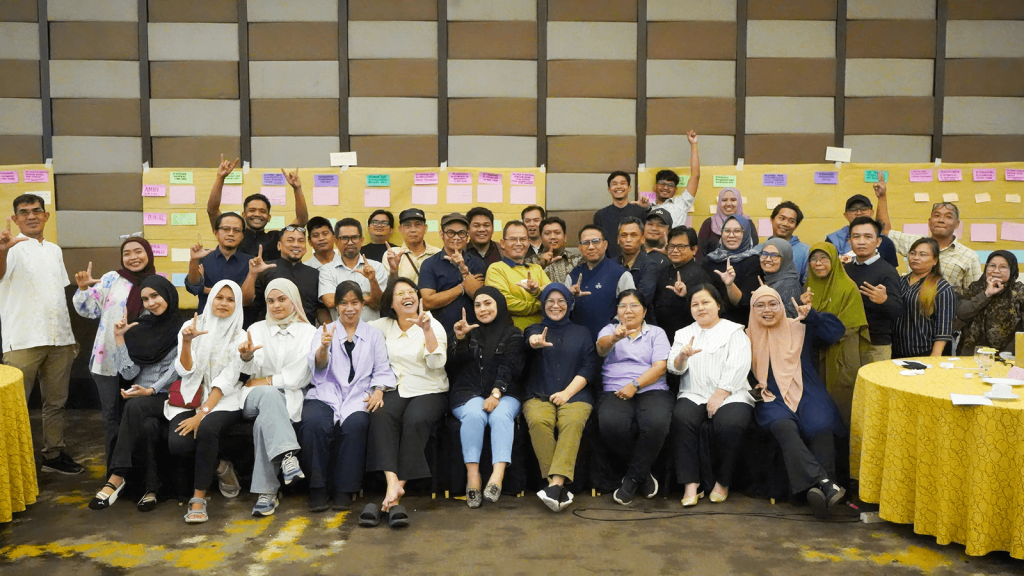
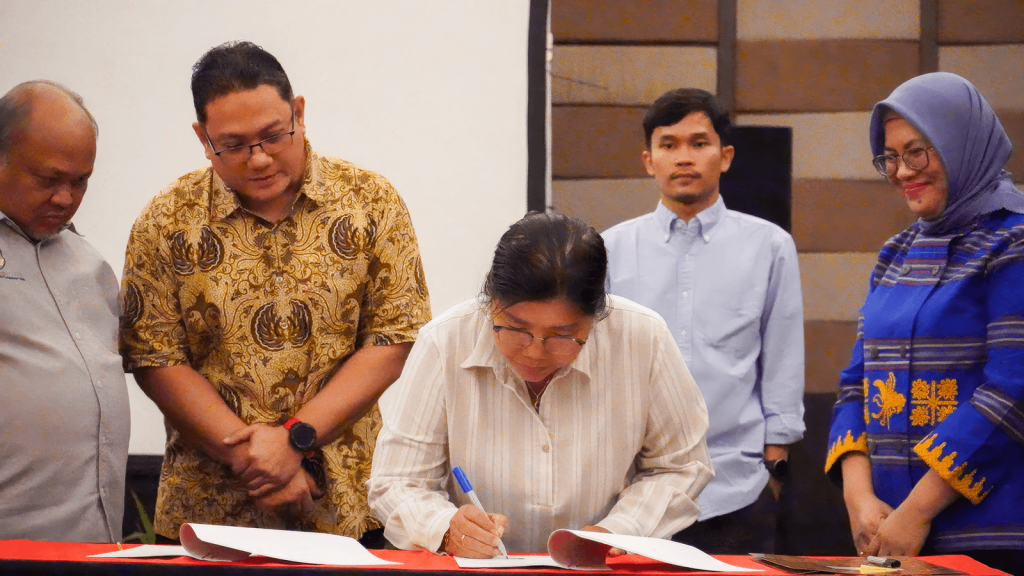
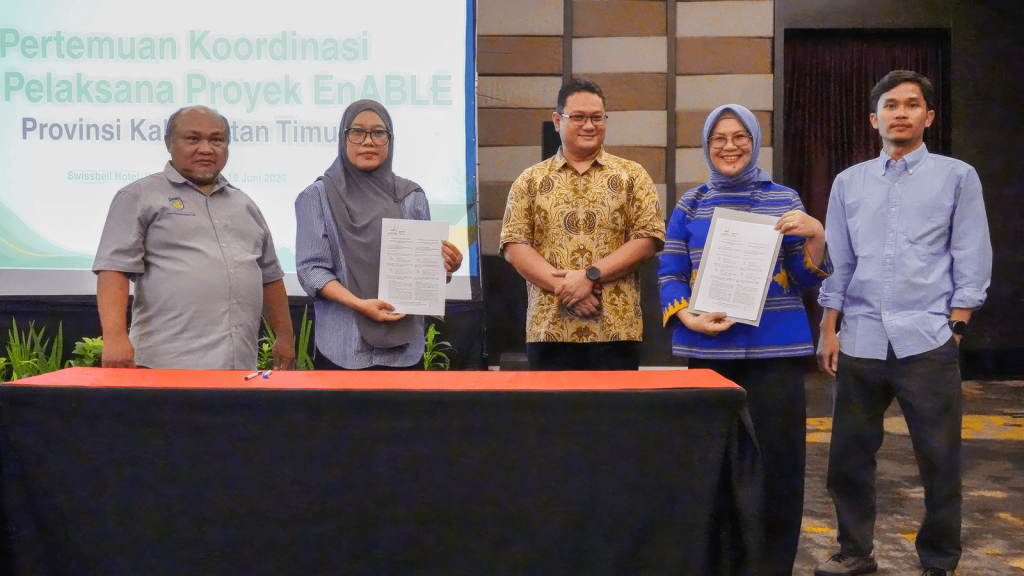
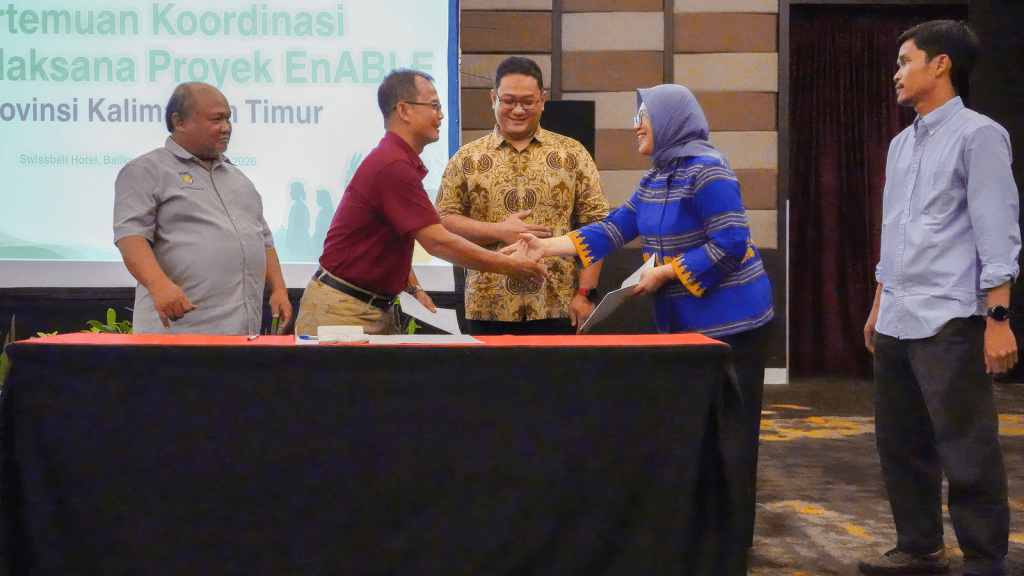
Balikpapan (17/06/2026) – KEMITRAAN, together with 12 Civil Society Organizations (CSOs), signed partnership agreements to provide facilitation and assistance in 71 villages across four districts in East Kalimantan through the EnABLE program.
The EnABLE Project (Enhancing Access to Benefits while Lowering Emissions) is a strategic initiative aimed at strengthening inclusive participation in the implementation of the Emission Reduction Program (ERP) in East Kalimantan Province. The project seeks to improve access for vulnerable and marginalized groups to both carbon and non-carbon benefits through their participation in East Kalimantan’s jurisdictional emission reduction program.
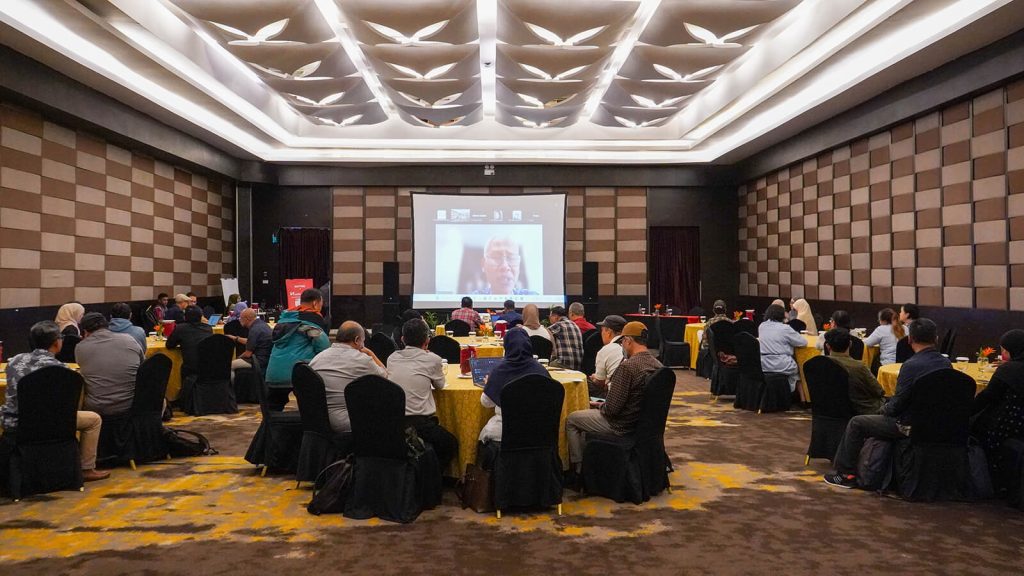
In his remarks, the Head of the Sub-National PMU EK-JERP FCPF-CF, who also serves as the Assistant for Economic Affairs and Development of the East Kalimantan Provincial Government and was represented on this occasion by the Head of the Economic Bureau and Chair of the EK-JERP FCPF Working Group, H. Iwan Darmawan, stated that the collaboration is expected to enhance the effectiveness of community facilitation efforts through coordination with partners who have long contributed to and understand local conditions in East Kalimantan.
“CSOs serve as effective bridges through information dissemination, strengthening community participation, assisting community groups in accessing opportunities, and enhancing the involvement of Indigenous Peoples, women, and persons with disabilities so that they can actively participate,” he said.
He emphasized that the Provincial Government expects the facilitation process to uphold principles of good governance, as the success of the program should be measured not only by numbers, but also by the quality of the process, community participation, and the impacts generated.
“It should be implemented while upholding inclusivity, meaningful participation, and accountability, with due consideration for the rights of Indigenous Peoples, local wisdom, and environmental sustainability,” Iwan added.
According to Fadjar Pambudhi, a representative of the East Kalimantan Regional Climate Change Council (DDPI), this partnership is important to ensure that communities affected by climate change in East Kalimantan receive adequate support and assistance.
“Last year in West Kutai Regency, several farming communities experienced crop failures due to an unusually prolonged dry season, which prevented their rice crops from developing properly,” he explained.
According to Fadjar, the EnABLE Project can serve as a connecting platform for affected communities to access financial incentives in the form of performance-based payments through the Forest Carbon Partnership Facility (FCPF), which has already been received by the Provincial Government.
“The efforts undertaken through the FCPF have produced results, and funding has already been disbursed to the government. The next crucial step is ensuring that the benefits reach communities at the local level, including vulnerable groups, women, persons with disabilities, youth, and others,” he said.
Fadjar also expressed hope that the 12 implementing CSOs would contribute to documenting local initiatives that have been carried out in support of climate mitigation and adaptation efforts in their assisted villages.
“This will provide valuable data that can showcase traditional wisdom in East Kalimantan and its positive contributions to forest management in Indonesia. Examples include allocating forest areas as reserves and setting aside forests for environmental education for younger generations in villages,” he noted.
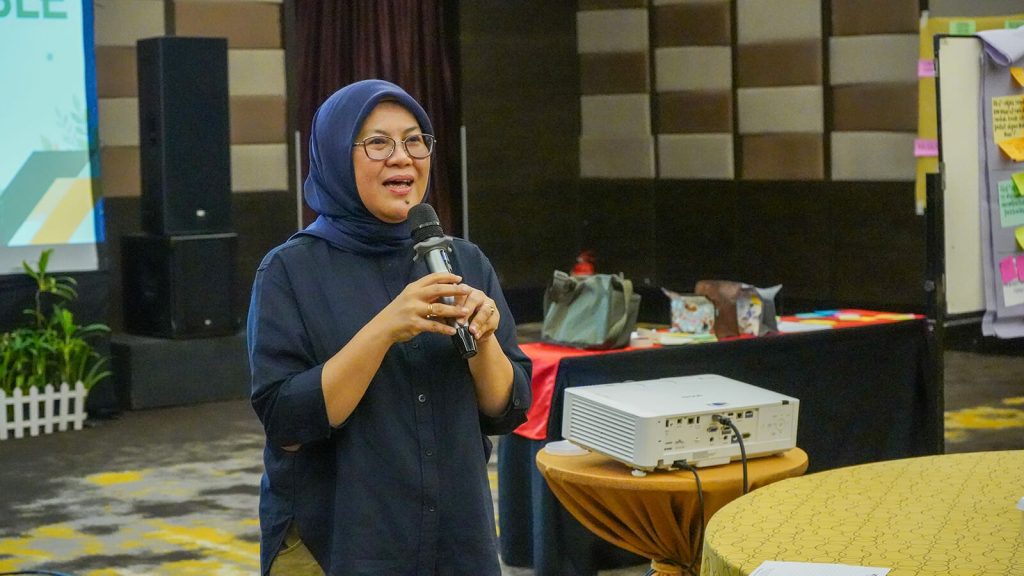
Meanwhile, according to EnABLE Team Leader Ade Siti Barokah, the project aims to reach approximately 20,725 beneficiaries.
“This figure forms part of the project’s accountability framework, allowing us to measure outcomes, as the financial value of the project is directly linked to the number of beneficiaries reached,” she explained.
Of the total target beneficiaries, 90 percent consist of the primary target groups, with 50 percent representing Indigenous Peoples and other vulnerable groups, while 40 percent are women.
According to Ade, setting these percentages as targets is essential because the program is fundamentally focused on inclusion, making the involvement of marginalized groups a necessity.
Ade expressed hope that these efforts will ultimately ensure that the concerns and priorities of Indigenous Peoples, women, and other vulnerable groups are reflected in the program proposals they submit to the Provincial Government as the recipient of FCPF funding.
“These efforts will also contribute to strengthening emission reduction targets and supporting the conservation of forests and natural ecosystems in East Kalimantan,” she concluded.