Home / Publication

Valuable Lessons from Salena

Amid the global commitment to advancing climate justice and sustainable environmental governance, program implementation at the grassroots level often brings development actors into direct engagement with deeply rooted local socio-cultural systems. For KEMITRAAN, this encounter is not merely about carrying out program activities, but also a living learning space in pursuing the organization’s mission with a strong commitment to social and environmental safeguards.

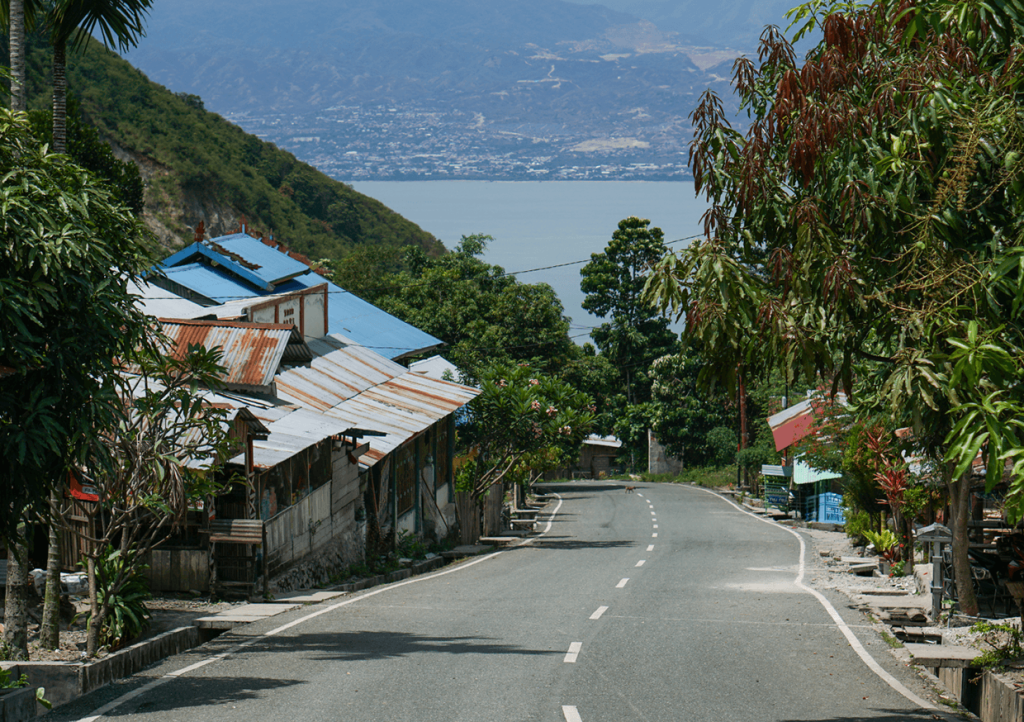
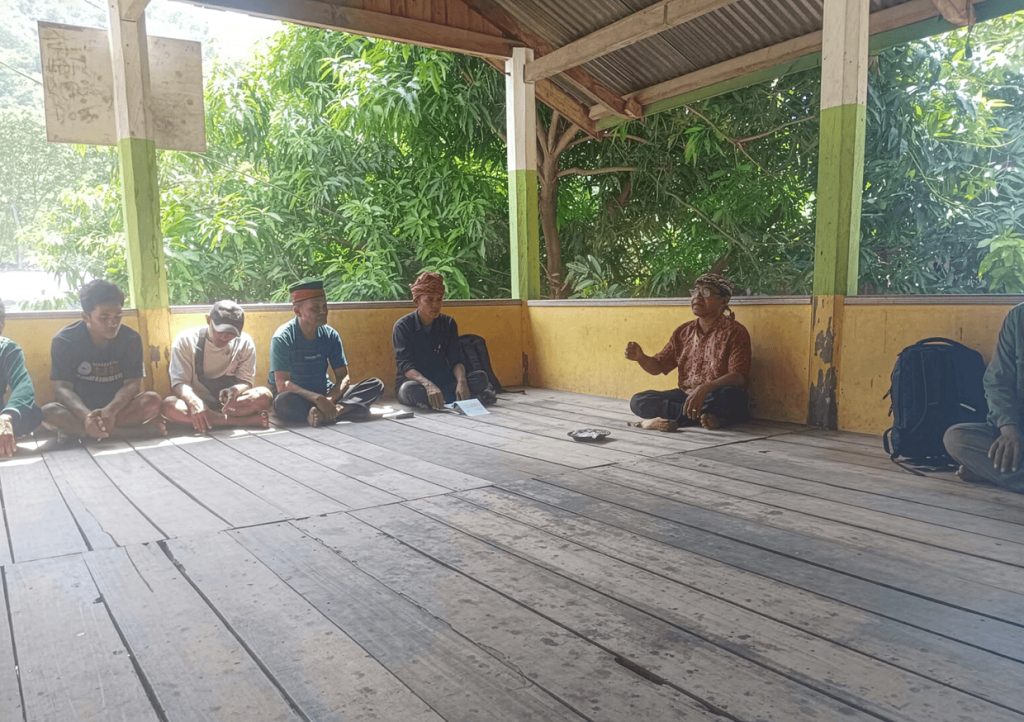
On May 6, 2026, KEMITRAAN’s communication team, together with representatives from BPDLH and media representatives, visited the Result-Based Payment (RBP) REDD+ program area in Central Sulawesi. After conducting a meeting with the Head of KPH Banawa Lalundu and representatives of the Nggolo Indigenous Community in Salena, Buluri Subdistrict, Palu City, KEMITRAAN received a complaint from the Indigenous Institution regarding alleged violations of customary rules committed by the team inside the Bantaya (traditional meeting hall).

The three reported violations included:

  1. Wearing footwear inside the Bantaya;
  2. Moving around excessively while inside the Bantaya;
  3. Sitting on the boundary divider in a way that was not aligned with others seated cross-legged, which was considered disrespectful.

In response to the complaint raised by the indigenous institution, KEMITRAAN immediately activated its grievance handling mechanism with empathy, transparency, and accountability. Without delay, KEMITRAAN’s RBP REDD+ Program Lead for Central Sulawesi attended the customary court forum organized by the Nggolo Indigenous Institution on May 8, 2026.

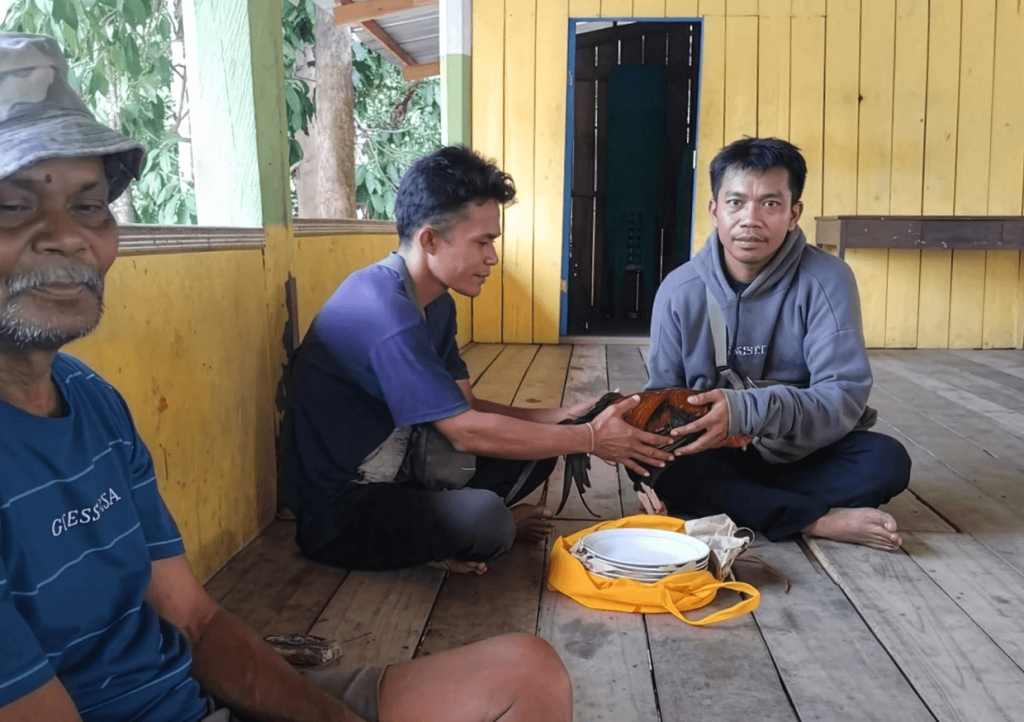
In the spirit of deliberation and mutual respect, KEMITRAAN, representing the visiting team from KEMITRAAN, BPDLH, and the media, openly expressed its apology for the oversight and lack of understanding regarding local customary rules. As a form of moral responsibility and absolute respect for the prevailing customary law, KEMITRAAN accepted and immediately fulfilled the customary fine (givu), consisting of one chicken and five white plates, on May 9, 2026.

Full Resolution Through Restored Relations

KEMITRAAN emphasized that all issues arising in the field had been fully resolved peacefully and amicably directly with the Head of the Nggolo Indigenous Institution, Mr. Haerul. During the handover ceremony of the customary fine, the Head of the Nggolo Indigenous Institution stated that “all problems and misunderstandings that occurred have been declared resolved.” Through the fulfillment of the customary sanction, the customary relationship and ties of goodwill among KEMITRAAN, BPDLH, the Banawa Lalundu Forest Management Unit (KPH), and the indigenous community have been fully restored in harmony.
A Learning Experience for Inclusive Climate Action

For KEMITRAAN, this incident is not viewed as an obstacle, but rather as evidence of the successful functioning of social control mechanisms within indigenous communities. It demonstrates that indigenous peoples’ protection mechanisms within global climate financing programs managed by KEMITRAAN are genuinely implemented and are not merely administrative formalities.

“We do not see this customary sanction as a punishment, but rather as a process of upholding and respecting the rules of the local indigenous community, and this aligns with our commitment to implementing social and environmental safeguard frameworks,” explained Hasbi Berliani, Program Director of KEMITRAAN.
This experience serves as both a lesson and a valuable evaluation for KEMITRAAN to continuously improve the quality of cultural sensitivity guidance for all project teams working at the grassroots level. KEMITRAAN remains fully committed to ensuring the principles of Do No Harm and respect for local customs and traditions in order to realize sustainable, inclusive, dignified, and climate-just development.

“As a follow-up measure, we will continue strengthening the understanding of program teams and related partners regarding social and environmental safeguard frameworks, including developing concise guidelines that will serve as references for every KEMITRAAN staff member working in the field, especially in indigenous territories,” Hasbi added.


2020

This agreement was signed between Green Climate Fund (GCF) and PARTNERSHIP. This agreement formalizes KEMITRAAN’s accountability in implementing projects approved by the GCF.

For your information, the GCF is the world’s largest special fund that helps developing countries reduce greenhouse gas emissions and increase their ability to respond to climate change.

These funds were collected by the United Nations Framework Convention on Climate Change (UNFCCC) in 2010. The GCF has an important role in realizing the Paris Agreement, namely supporting the goal of keeping the average global temperature increase below 2 degrees Celsius.

2000-2003

KEMITRAAN played a crucial role in supporting the development of legislation to establish the KPK. This was followed by steps to support the Government and DPR in selecting competent commissioner candidates and also supporting civil society groups to critically monitor the selection process. After the commissioners were appointed, they asked KEMITRAAN to help with the institutional design and initial recruitment of the KPK, as well as play the role of donor coordinator. It is clear that KEMITRAAN plays a key role in supporting the Corruption Eradication Commission to develop the capacity and strategies needed to work as effectively as possible.

2016

In March 2016, KEMITRAAN received international accreditation from the Adaptation Fund. The Adaptation Fund Board, in its 27th meeting, decided to accredit KEMITRAAN as National Implementing Entity (NIE) from the Adaptation Fund. KEMITRAAN is the first and only Indonesian institution to be accredited as a NIE Adaptation Fund in Indonesia.

2003

In 2003, KEMITRAAN became an independent legal entity registered as a Non-Profit Civil Partnership. At that time, KEMITRAAN was still a program managed by UNDP until the end of 2009. Since the beginning of 2010, KEMITRAAN took over full responsibility and accountability for the programs and their development.

1999-2000

The Partnership for Governance Reform, or KEMITRAAN, was founded in 2000 following Indonesia’s first free and fair general election in 1999. This historic election is an important step in Indonesia’s efforts to move away from an authoritarian past towards a democratic future. PARTNERSHIP was established from a multi-donor trust fund and is managed by United Nations Development Programme (UNDP) with a mandate to advance governance reform in Indonesia

1999-2000

Kemitraan bagi Pembaruan Tata Kelola Pemerintahan, atau KEMITRAAN, didirikan pada tahun 2000 setelah berlangsungnya pemilihan umum pertama di Indonesia yang bebas dan adil pada tahun 1999. Pemilu bersejarah ini merupakan langkah penting dalam upaya Indonesia keluar dari masa lalu yang otoriter menuju masa depan yang demokratis. KEMITRAAN didirikan dari dana perwalian multi-donor dan dikelola oleh United Nations Development Programme (UNDP) dengan mandat untuk memajukan reformasi tata kelola pemerintahan di Indonesia.

2020

This agreement was signed between Green Climate Fund (GCF) and PARTNERSHIP. This agreement formalizes KEMITRAAN’s accountability in implementing projects approved by the GCF.

For your information, the GCF is the world’s largest special fund that helps developing countries reduce greenhouse gas emissions and increase their ability to respond to climate change.

These funds were collected by the United Nations Framework Convention on Climate Change (UNFCCC) in 2010. The GCF has an important role in realizing the Paris Agreement, namely supporting the goal of keeping the average global temperature increase below 2 degrees Celsius.

2020

This agreement was signed between Green Climate Fund (GCF) and PARTNERSHIP. This agreement formalizes KEMITRAAN’s accountability in implementing projects approved by the GCF.

For your information, the GCF is the world’s largest special fund that helps developing countries reduce greenhouse gas emissions and increase their ability to respond to climate change.

These funds were collected by the United Nations Framework Convention on Climate Change (UNFCCC) in 2010. The GCF has an important role in realizing the Paris Agreement, namely supporting the goal of keeping the average global temperature increase below 2 degrees Celsius.

2016

In March 2016, KEMITRAAN received international accreditation from the Adaptation Fund. The Adaptation Fund Board, in its 27th meeting, decided to accredit KEMITRAAN as National Implementing Entity (NIE) from the Adaptation Fund. KEMITRAAN is the first and only Indonesian institution to be accredited as a NIE Adaptation Fund in Indonesia.

2003

In 2003, KEMITRAAN became an independent legal entity registered as a Non-Profit Civil Partnership. At that time, KEMITRAAN was still a program managed by UNDP until the end of 2009. Since the beginning of 2010, KEMITRAAN took over full responsibility and accountability for the programs and their development.

2000-2003

KEMITRAAN played a crucial role in supporting the development of legislation to establish the KPK. This was followed by steps to support the Government and DPR in selecting competent commissioner candidates and also supporting civil society groups to critically monitor the selection process. After the commissioners were appointed, they asked KEMITRAAN to help with the institutional design and initial recruitment of the KPK, as well as play the role of donor coordinator. It is clear that KEMITRAAN plays a key role in supporting the Corruption Eradication Commission to develop the capacity and strategies needed to work as effectively as possible.

1999-2000

The Partnership for Governance Reform, or KEMITRAAN, was founded in 2000 following Indonesia’s first free and fair general election in 1999. This historic election is an important step in Indonesia’s efforts to move away from an authoritarian past towards a democratic future. PARTNERSHIP was established from a multi-donor trust fund and is managed by United Nations Development Programme (UNDP) with a mandate to advance governance reform in Indonesia