

By: Yael Stefany
LMA Cooperative and the Transformation Journey of Cina Benteng Women
By: Yael Stefany
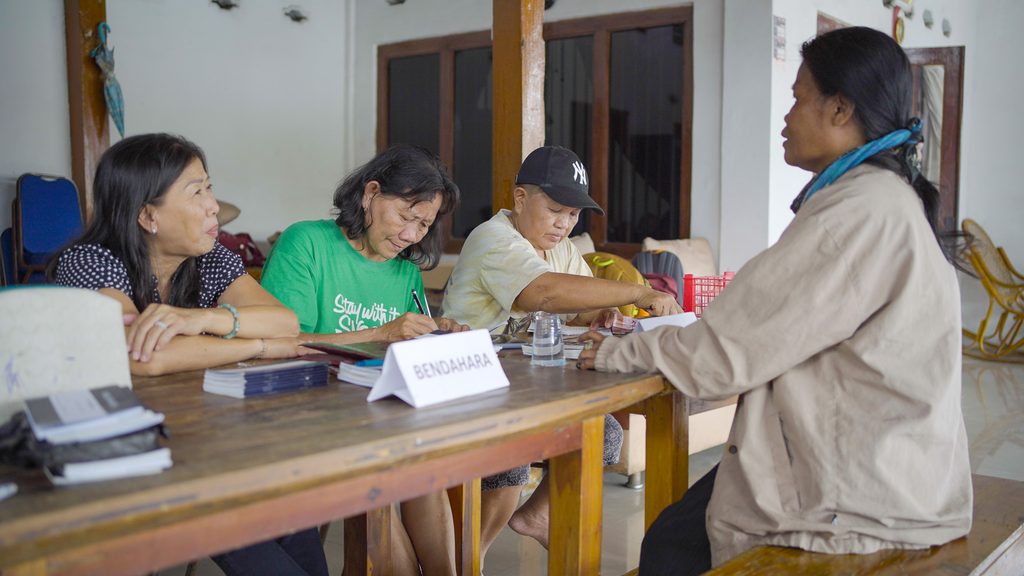
From a cooperative established in 2022, Cina Benteng women in Belimbing Village, Kosambi Subdistrict, Tangerang Regency, now manage assets worth nearly IDR 450 million. They also help residents obtain civil registration documents, take part in preventing violence against women, develop businesses, and revive crocheting skills that are part of their community’s identity.
This situation is in stark contrast to what existed before they established the cooperative, later named Lampion Merah Abadi (LMA). For many Cina Benteng women in Belimbing Village, obtaining loans for business capital was not always easy. With limited access to formal financial institutions, moneylenders and mobile lending services became more accessible options. However, this convenience often came with a heavy repayment burden due to very high interest rates.
Maskota, the Head of Belimbing Village, confirmed this situation. She explained that its impact on residents was serious. In some cases, it even led to arguments between husbands and wives because wives borrowed money for family needs and, as the debt increased due to high interest rates, their husbands did not take responsibility.

“For a long time, people in this village have had a habit of borrowing money through mobile lending services, even though they know the interest rates are very high. Why? Because the money is easy to access and disbursed quickly,” Maskota explained.
This situation was one of the reasons why the Women’s Resource Development Center (Pusat Pengembangan Sumberdaya Wanita/PPSW) Jakarta together with KEMITRAAN through Estungkara Program supported Cina Benteng women in establishing the Women’s Resource Development Cooperative (Koperasi Wanita Pengembang Sumberdaya/KWPS) Lampion Merah Abadi on August 7, 2022.
Initially, the cooperative served as a place for women to save money, borrow funds, and develop their businesses. They learned bookkeeping and organizational management. Some members also consigned products for sale, ranging from salted eggs, snacks, clothing, and soy milk to various homemade products.
However, for women who had previously spent most of their time at home, the cooperative offered something much greater than access to capital: a space to meet.
Dewi, one of the cooperative’s administrators, sees the cooperative as a space where economic activities and relationships among women come together. Coming to make deposits or leave products for sale also meant meeting other members, talking, and exchanging experiences.
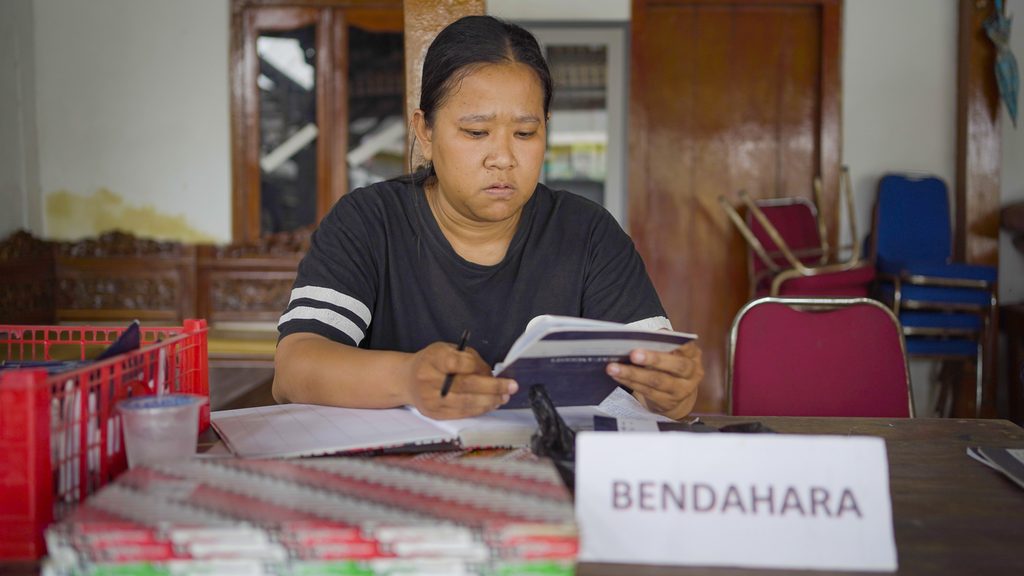
“In the early days, the cooperative was basically just about savings and loans. But after PPSW Jakarta organized many training sessions and meetings, whenever the women gathered, someone would eventually open up. It could be about their husbands, their children, or their neighbors,” Dewi said.
Through these meetings, other issues gradually came to the surface. It turned out that many children still did not have civil registration documents. Some women had experienced violence and child marriage. There were also women who had traditionally been confined to domestic roles and were not accustomed to expressing their opinions in public spaces.
The cooperative gradually became an entry point for discussing these issues.
From a Cooperative to a Learning Space
The support provided did not stop at cooperative training. Members learned about civil registration administration, bookkeeping, leadership, and participated in discussions on gender equality and social inclusion. They also gained knowledge about preventing child marriage and violence against women.
For Chen Fie, the process changed the way she saw herself.
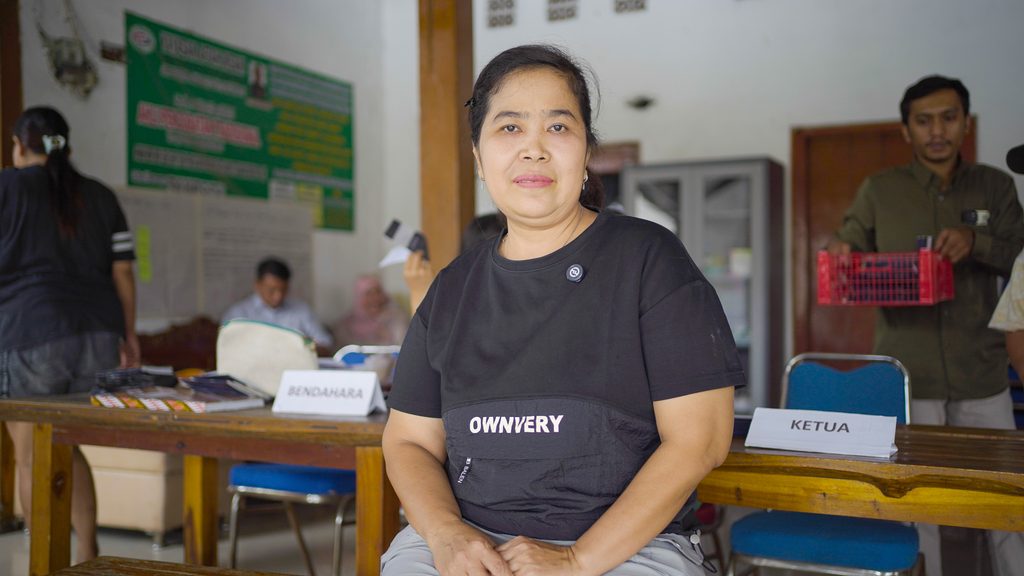
Before joining the cooperative and later being entrusted to lead KWPS Lampion Merah Abadi, she spent most of her time at home taking care of her family. The cooperative gave her opportunities to meet more people, including government officials, and to take on tasks she had never done before.
“I only graduated from elementary school. Meanwhile, people out there must have had much higher levels of education than me. Especially back then, I wasn’t nearly as fluent when speaking,” Chen Fie recalled.
She initially had doubts. But with the support of her late husband, Chen Fie convinced herself to accept the offer to become the cooperative’s chairperson and continued learning. She not only learned about cooperatives, but also how to process birth certificates, family cards, and Child Identity Cards (Kartu Identitas Anak/KIA). She later used this knowledge to help other residents.
This small change became significant when cooperative members began interacting with public services. Before the support program, KIA ownership in Belimbing Village was still very low. Iqbal Yusti Ekoputro, Program Director of PPSW Jakarta, said that PPSW Jakarta’s data showed that nearly 99 percent of the 217 children in Belimbing Village did not have a KIA. Through mentoring and the involvement of community cadres, 55 KIAs were subsequently issued.
“Thanks to the capacity-building training provided, Cina Benteng women were able to lobby the village government all the way to the district level,” he added.
For women who had previously been unfamiliar with dealing with government offices, this experience was about more than simply obtaining documents. They began to understand where to go, how to communicate their needs, and how to connect residents with available services. From there, their confidence grew.
When Women Begin to Take on a Role
The confidence developed through meetings and learning processes encouraged cooperative members to begin communicating with local governments and government agencies. They were no longer present merely as program beneficiaries, but began to raise issues they encountered in their communities. This journey eventually brought the cooperative into the area of women’s protection.
In 2024, the Lampion Merah Task Force was established as part of efforts to prevent and report violence against women. Its members learned how to identify issues, receive reports, and connect residents with institutions authorized to provide appropriate support.
The cooperative did not take over the role of the government or service institutions. Instead, the women developed the capacity to identify problems and create pathways for residents to connect with the appropriate parties.
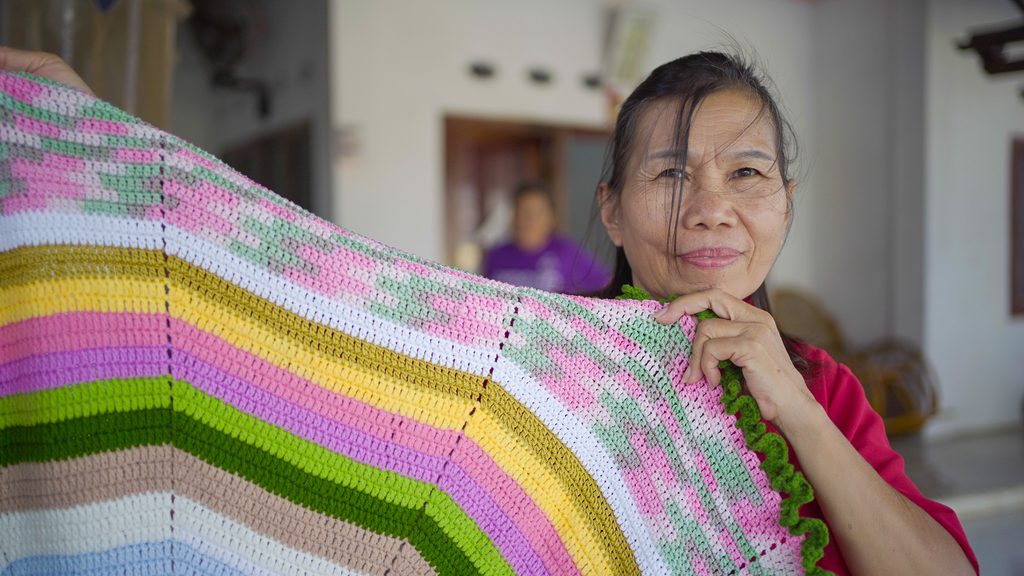
On the other hand, the cooperative also began to look back at what the community already had. Since October 2024, crocheting skills that had once been practiced among Cina Benteng women have been learned and revived. Bags, wallets, brooches, keychains, and cake covers used in Chinese New Year prayer traditions have once again been produced.
Crocheting has become more than just an economic activity. It has become a way of reconnecting women with knowledge and a cultural identity that had gradually been left behind.
A Cooperative That Goes Beyond Expectations
Nearly four years since its establishment, KWPS Lampion Merah Abadi has grown far beyond its initial function as a savings and lending institution. The cooperative’s assets have now reached nearly IDR 450 million. But this figure is not the only measure of change.
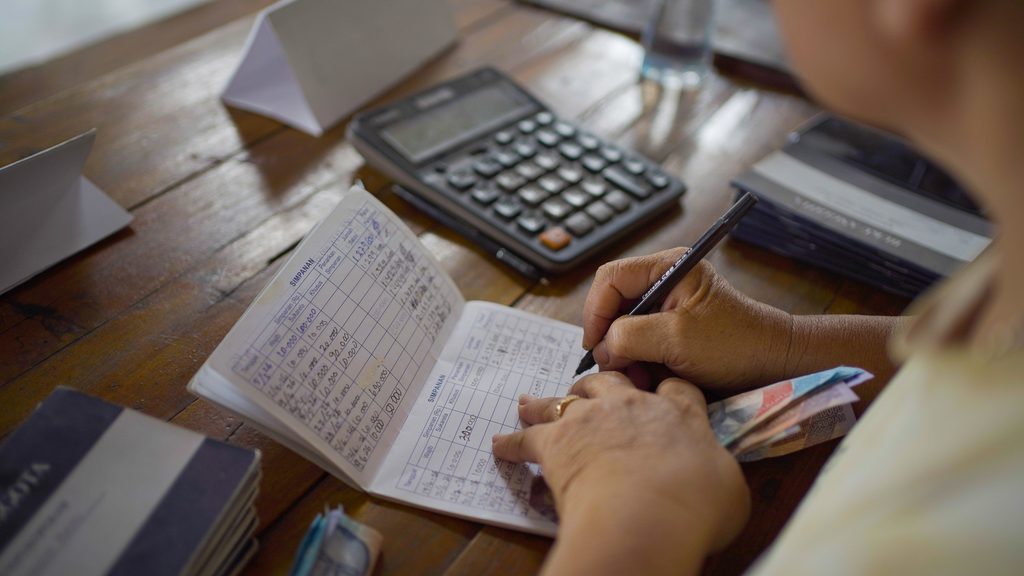
Some women who previously ran businesses only from their homes now have a space to market their products. Some who previously did not know how to access government services now help other residents obtain documents. Some who previously felt they did not have the capacity to speak up now have the confidence to voice the needs of their community.
And issues that were previously considered private matters, such as violence against women, are now beginning to be discussed as shared concerns.
The journey of Lampion Merah Abadi demonstrates that economic empowerment and inclusive development do not take place in separate spaces. The need for capital became an entry point. From there, women gathered, built trust, learned to understand their rights and available services, and gradually found the courage to speak up.
The cooperative ultimately became more than a place where women could access capital.
It became a space where women learned that they have the capacity to manage an organization, help other residents, engage with government, preserve cultural knowledge, and take part in determining the issues that affect their own lives.
For Cina Benteng women in Belimbing Village, change may not have come all at once. It grew from small things: from savings, meetings, bookkeeping, a civil registration document, a violence report, and strands of yarn being crocheted once again.
From there, the cooperative became a home for change, a place where women are no longer merely recipients of development, but are beginning to take part in determining what development should look like and how it should work for them.