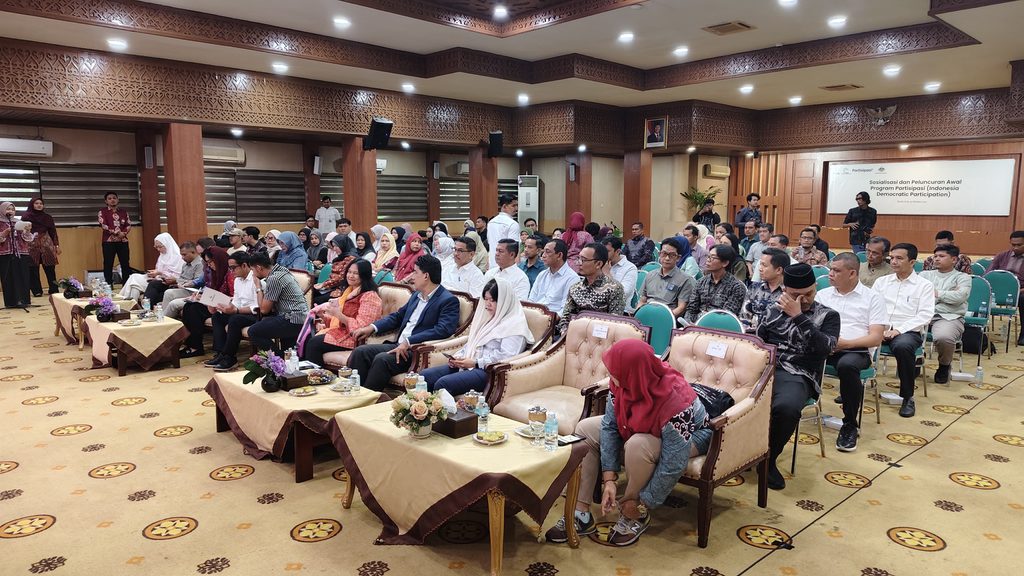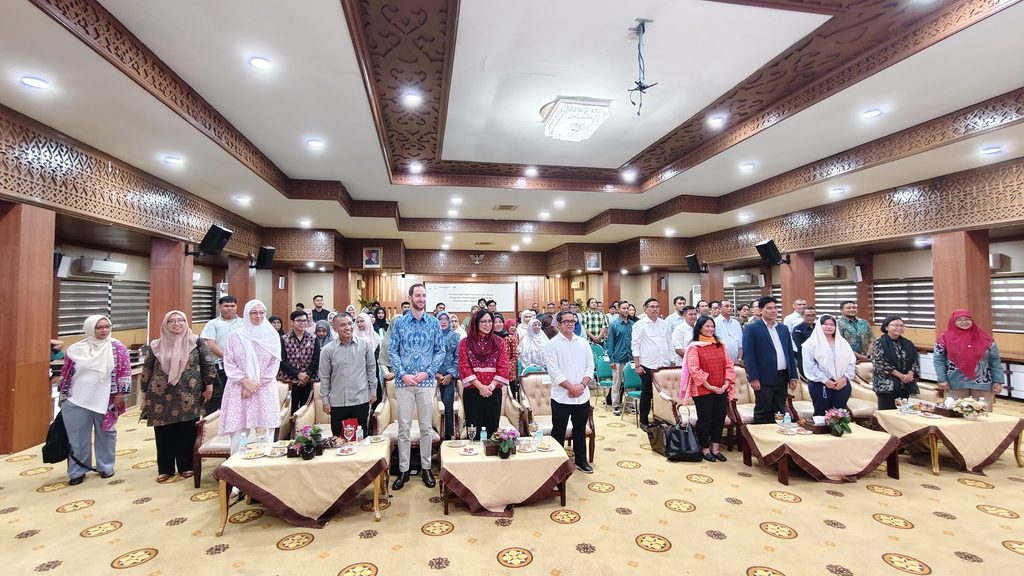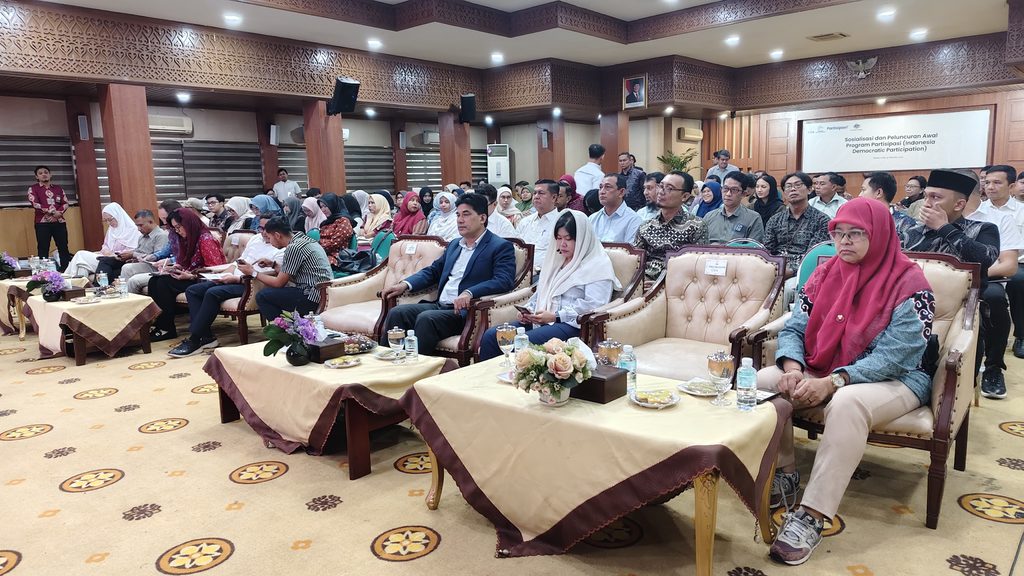


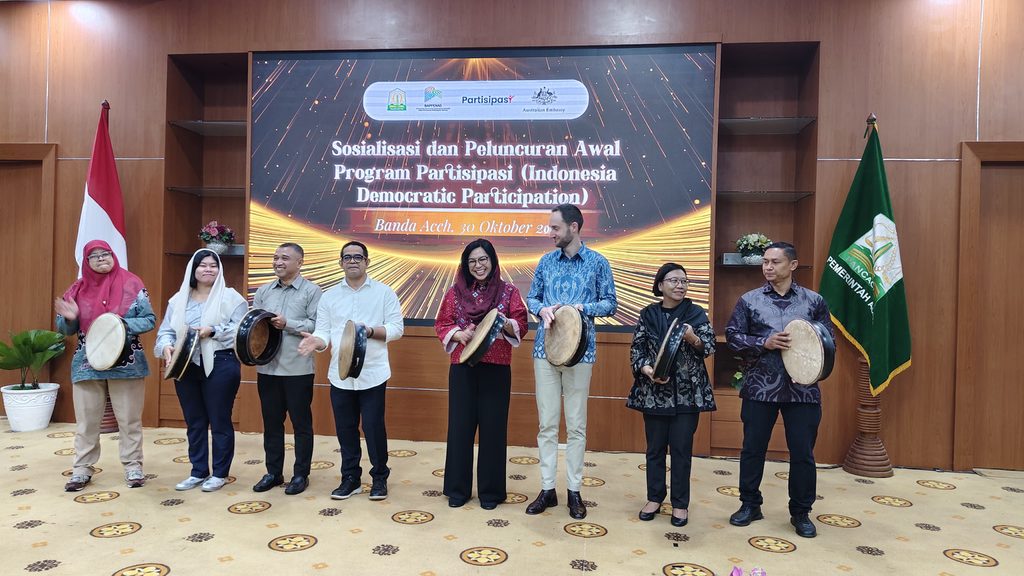
Banda Aceh (30 October 2026) – A strong democracy depends not only on effective institutions but also on citizen participation and collaboration among various stakeholders. Guided by this principle, the PARTISIPASI Program was officially launched in Aceh as part of the partnership between the Governments of Indonesia and Australia to strengthen substantive democracy in Indonesia.
Robert Sutton, Political Counsellor at the Australian Embassy in Indonesia, explained that the PARTISIPASI Program will be implemented at the national level and in three target areas: Makassar, Yogyakarta, and Aceh.
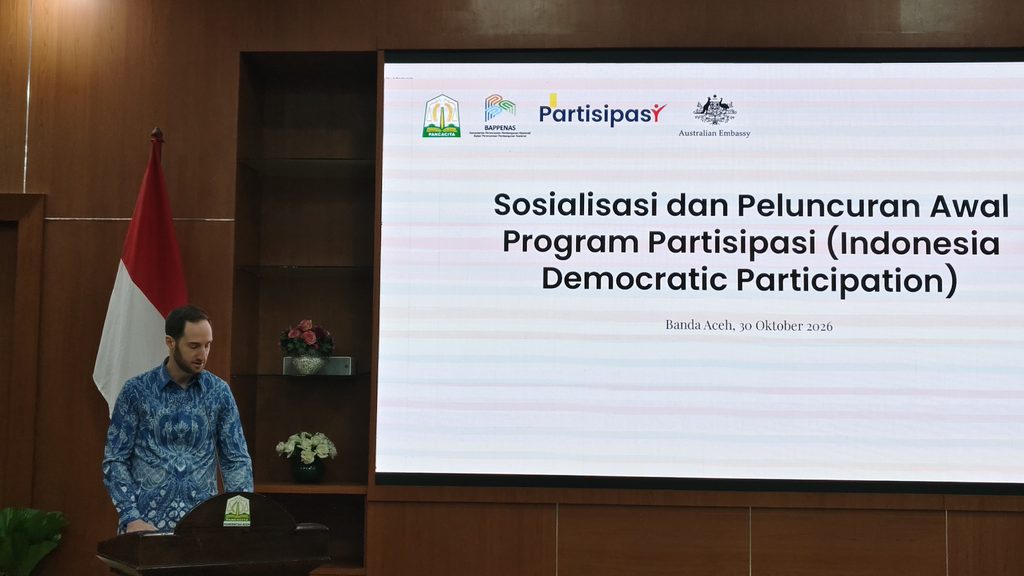
The program is designed to support Indonesia’s development priorities in democratic governance, as outlined in the National Medium-Term Development Plan (RPJMN) and the National Long-Term Development Plan (RPJPN).
“Through three main objectives: strengthening democratic institutions, strengthening civil society, and promoting collaborative democratic initiatives,” he stated.
According to him, these objectives will be pursued through five focus areas: electoral integrity, strengthening parliament and political representation, civic participation and education, independent and quality media, and strengthening resilience against misinformation and disinformation.
On the same occasion, Nuzula Anggraini, Director of National Ideology, Politics, and Democracy at the Ministry of National Development Planning/Bappenas, emphasized that previous democracy resilience programs in Aceh had created spaces for dialogue, bringing together youth communities, local government, elected representatives, and various community groups, including persons with disabilities.
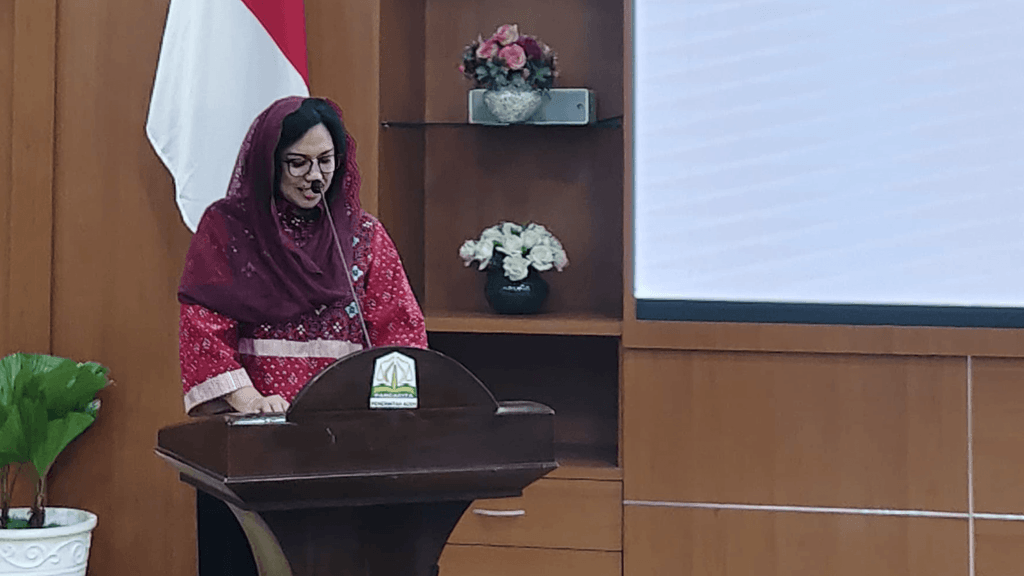
“It is these experiences of working together and the networks we have built that we need to continue nurturing through PARTISIPASI,” she said.
She further noted that participation in Aceh is also part of the effort to preserve peace and build trust among different groups. Therefore, the program’s implementation must respect Aceh’s unique context and involve religious leaders, customary institutions, universities, and community networks.
Echoing Nuzula’s remarks, Taufik, S.T., M.Si., Acting Regional Secretary of Aceh, also highlighted the importance of providing communities with the broadest possible space to openly express their ideas and aspirations and contribute to the policymaking process.
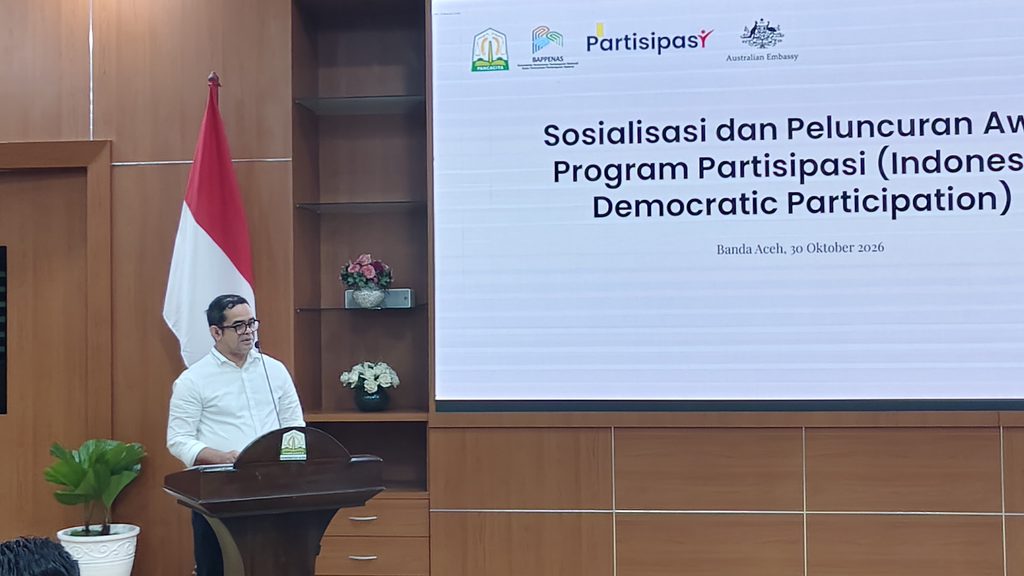
“This will ensure that the resulting policies are more responsive to people’s needs and deliver sustainable benefits,” he stated.
He expressed his hope that all levels of the Aceh Government would support the program’s implementation through effective coordination and cooperation, in accordance with their respective roles and mandates.
“May this partnership continue to grow productively and sustainably, delivering tangible benefits for strengthening democracy and governance in Aceh,” he added.
Meanwhile, Mustafa from The Asia Foundation (TAF) observed that democracy in Aceh does not exist only in formal forums but is also reflected in the everyday culture of public discussion.
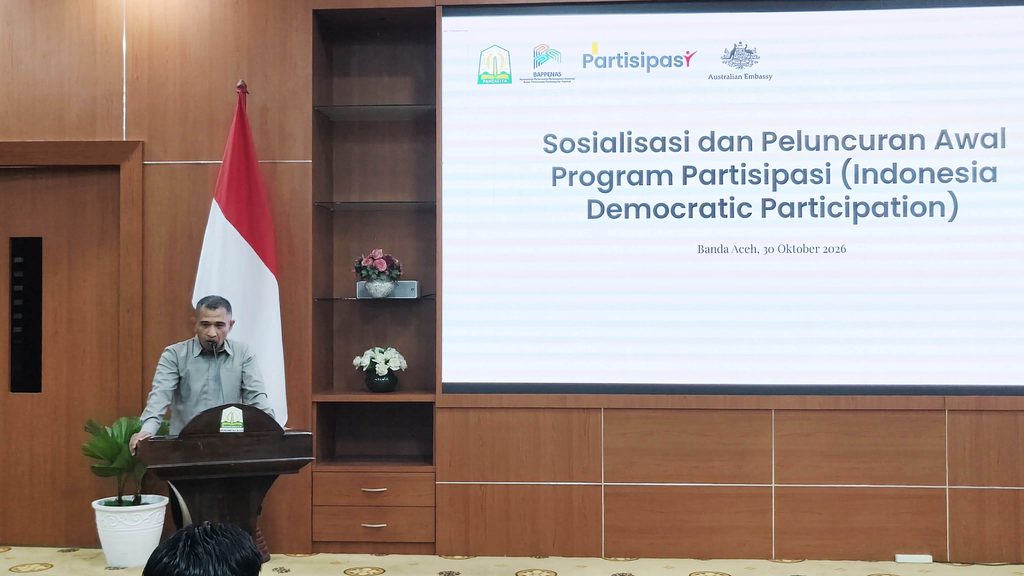
“Every time people in Aceh gather over coffee, it is an expression of democracy. I feel that Acehnese coffee itself is very democratic,” he remarked.
He explained that this is what makes participation in Aceh unique. Rather than saying that democracy in Aceh needs to be improved, he emphasized that democracy is part of everyday life, with its own ups and downs. What matters is ensuring that the direction of democracy in Aceh remains a meaningful struggle that benefits the community.
As one of the implementing partners of the PARTISIPASI Program in Aceh, KEMITRAAN will focus on strengthening the civil society ecosystem as one of the key pillars of substantive democracy.
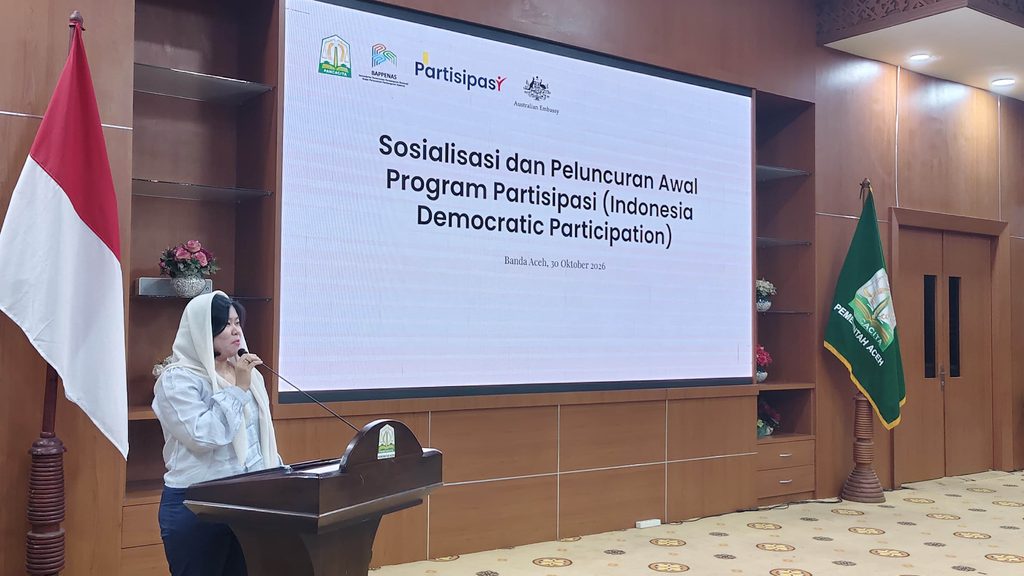
This was conveyed by Citra Referandum, Program Manager for Democracy, Justice, and Public Services at KEMITRAAN. In Aceh, KEMITRAAN will focus on strengthening the capacity and networks of civil society organizations so they can participate more actively in development processes, voice community needs, and build closer collaboration with the government and other stakeholders.
The launch of the PARTISIPASI Program in Aceh marks the beginning of a collective effort to strengthen multi-stakeholder collaboration in promoting a more inclusive, responsive, and impactful democracy. Through this approach, every actor is expected to contribute according to their respective roles in expanding citizen participation, strengthening public trust, and bringing about meaningful change for communities.