

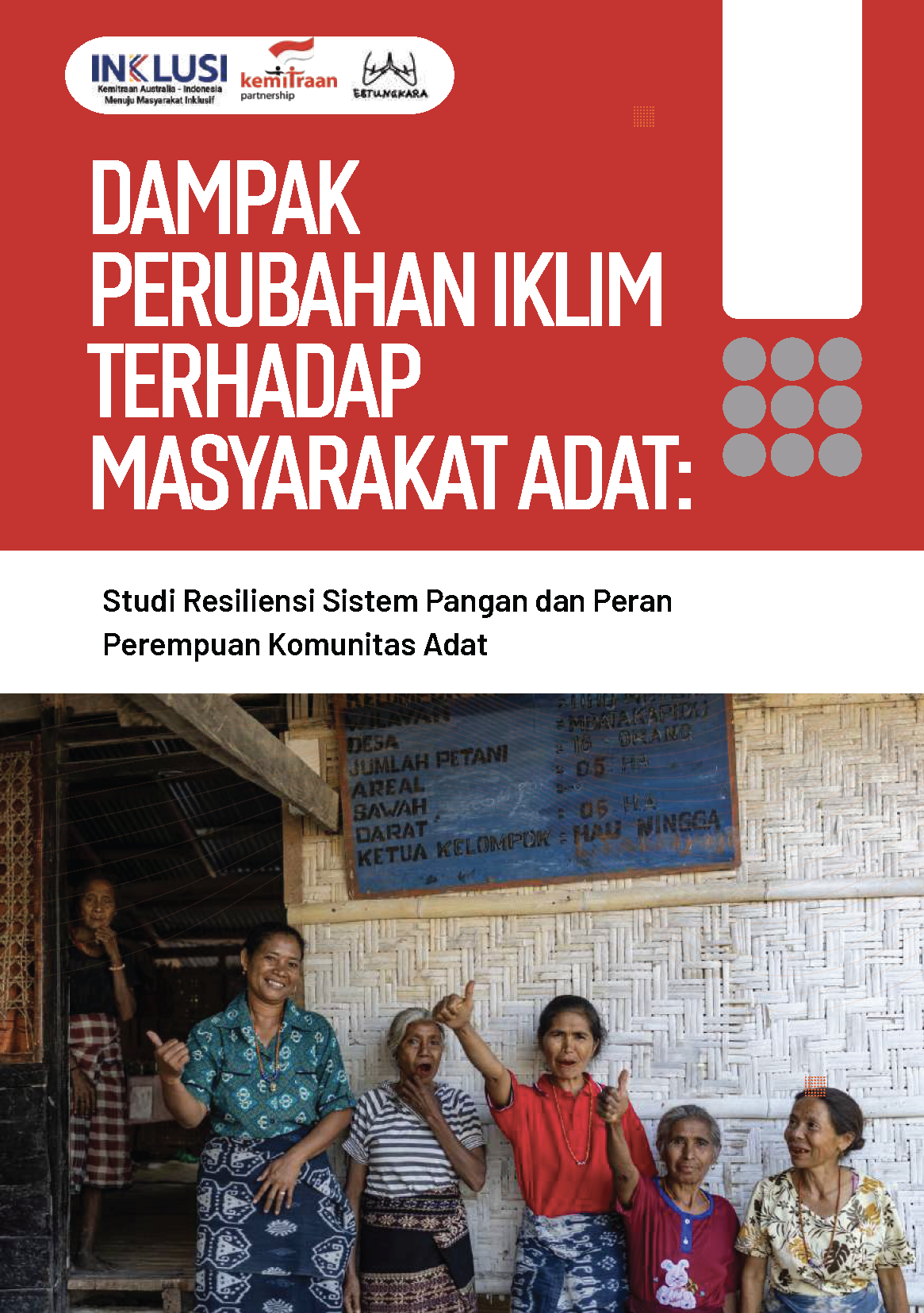
Climate change is not only transforming landscapes, but also reshaping the everyday lives of Indigenous Peoples. Shifting seasons, declining forest and agricultural yields, and increasingly limited access to natural resources have created distinct challenges for Indigenous women. In many Indigenous communities, women play a vital role in ensuring food and water security, safeguarding family health, and preserving traditional knowledge passed down through generations. As the environment changes, the responsibilities and burdens they carry continue to grow.
This research documents the experiences of Indigenous women in responding to the impacts of climate change in the ESTUNGKARA project areas. Grounded in their own lived experiences, the publication highlights that Indigenous women are not merely among those most affected by climate change—they are also key actors who possess valuable knowledge, practices, and adaptive strategies that contribute to the resilience and sustainability of their communities. The findings are expected to inform and strengthen climate policies and actions that are more equitable, inclusive, and respectful of the rights of Indigenous Peoples.