

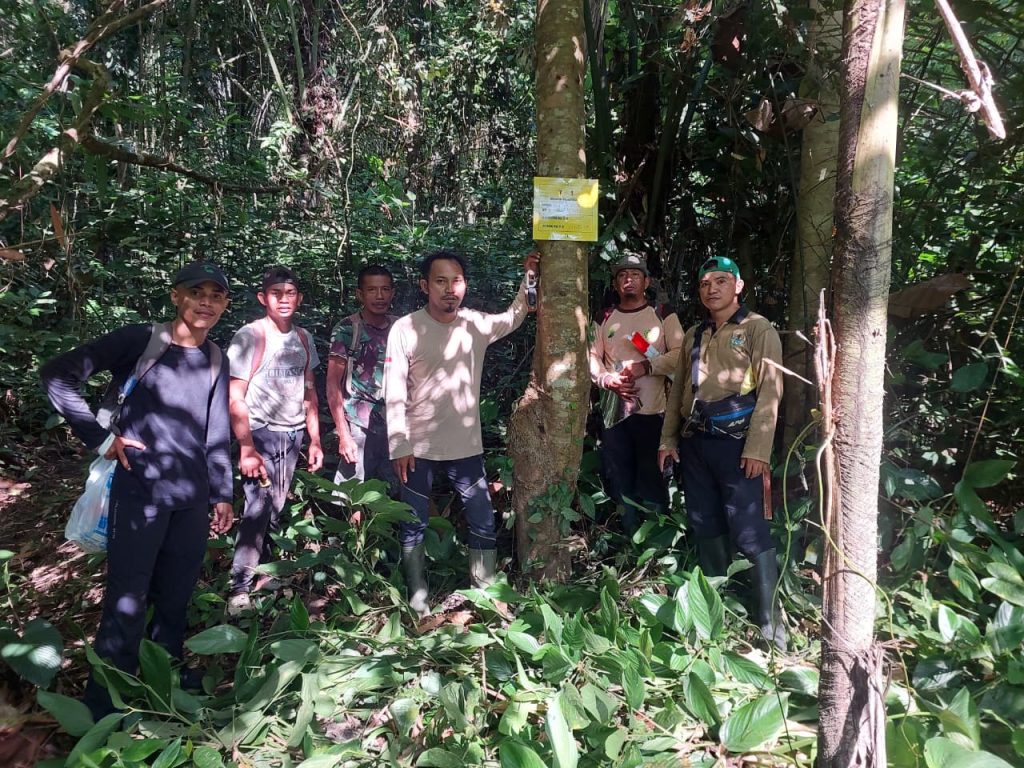
The Central Sulawesi Provincial Forestry Agency, together with KEMITRAAN and local Forest Management Units (KPH), has carried out a mapping of forest potential in Poso to strengthen governance of forest utilization focusing not only on economic potential but also on conservation.
In the Sintuvu Maroso KPH area of Poso Regency, for example, they worked with the LPHD Sulewana group in Sulewana Village and the HKm Kaju Ombo group in Lembomawo Subdistrict to identify timber species, non-timber potential, environmental services, and biodiversity.
Yerni Yunita from KPH Sintuvu Maroso noted that this activity is mandated by Law Number 41 of 1999 on Forestry, Article 13, which outlines the processes, steps, and objectives of forest inventory.
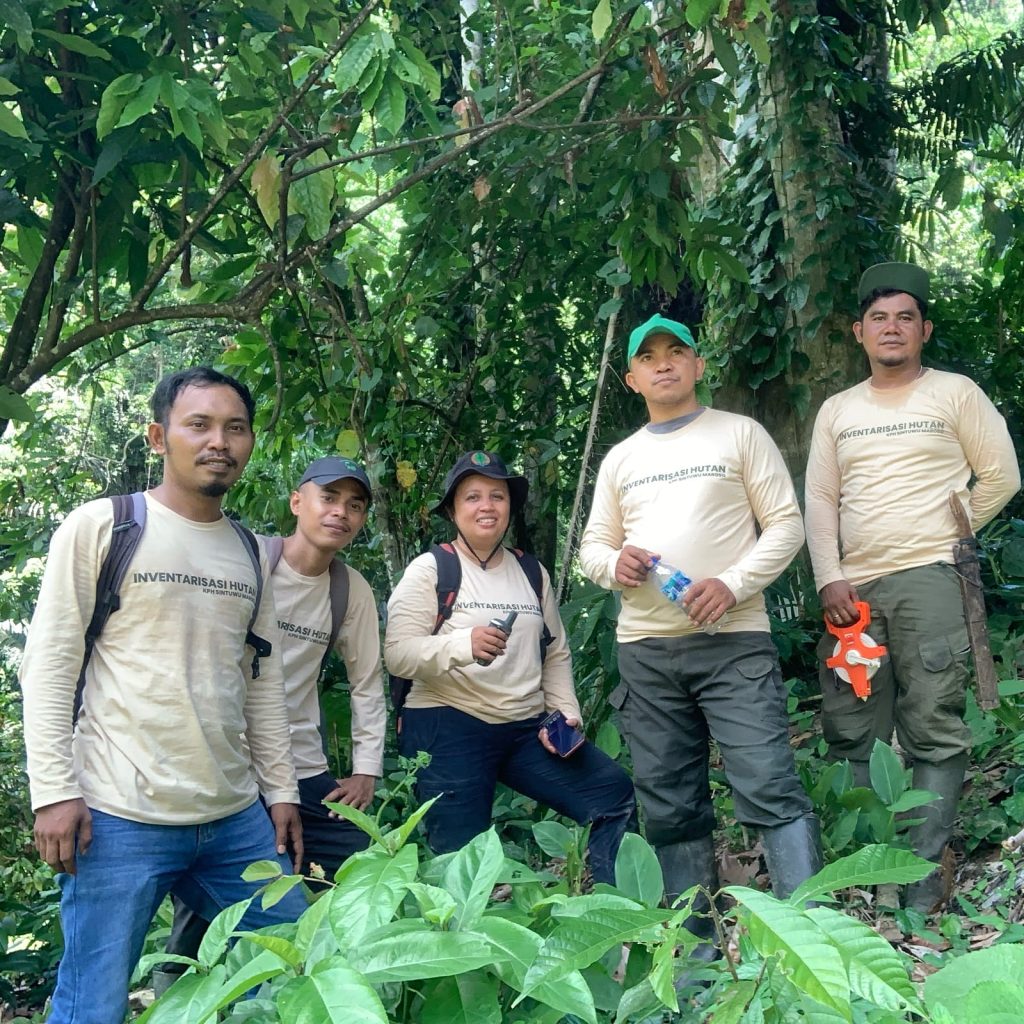
“Forest inventory is an important step in mapping potential and managing forest resources effectively and sustainably,” she said.
The identification process found 86 tree species, including Bayur and Ayo alongside mixed forest species that do not yet have local names. For non-timber forest products, rattan, nibong, and aren were identified as the three largest potentials.
Dasmin Ndo’o, head of LPHD Sulewana, said that this activity was carried out so that all group members could understand the existing potential within the forest area and make use of it in accordance with applicable regulations.

“The forest area holds many potentials that can be utilized and generate economic value—something many of us did not realize before,” he explained.
According to Kiki Rizki Amalia, Project Officer of PMU KEMITRAAN, this activity is part of efforts to strengthen forest governance in Central Sulawesi carried out by KEMITRAAN and the Provincial Forestry Agency under the RBP GCF REDD+ program.
In addition to Poso, similar activities have also been conducted with other KPH units across the province.

“Forest utilization must align with efforts to enhance conservation values, so forests continue to provide both ecological and economic benefits. Inventorying forest potential is essential to map and distinguish which resources can be used and which must be protected,” she emphasized.